Joshna Joy

What is Statistical Process Control (SPC) and How Does It Improve Quality?

What is Statistical Process Control? Statistical Process Control (SPC) uses statistical methods to monitor a manufacturing process and understand how it changes over time. It helps teams distinguish normal process variation from unusual changes that may require investigation. In simple terms Suppose a machine produces metal shafts with a target diameter of 10 mm. Even […]

What is Statistical Process Control (SPC) and How Does It Improve Quality? Read More »

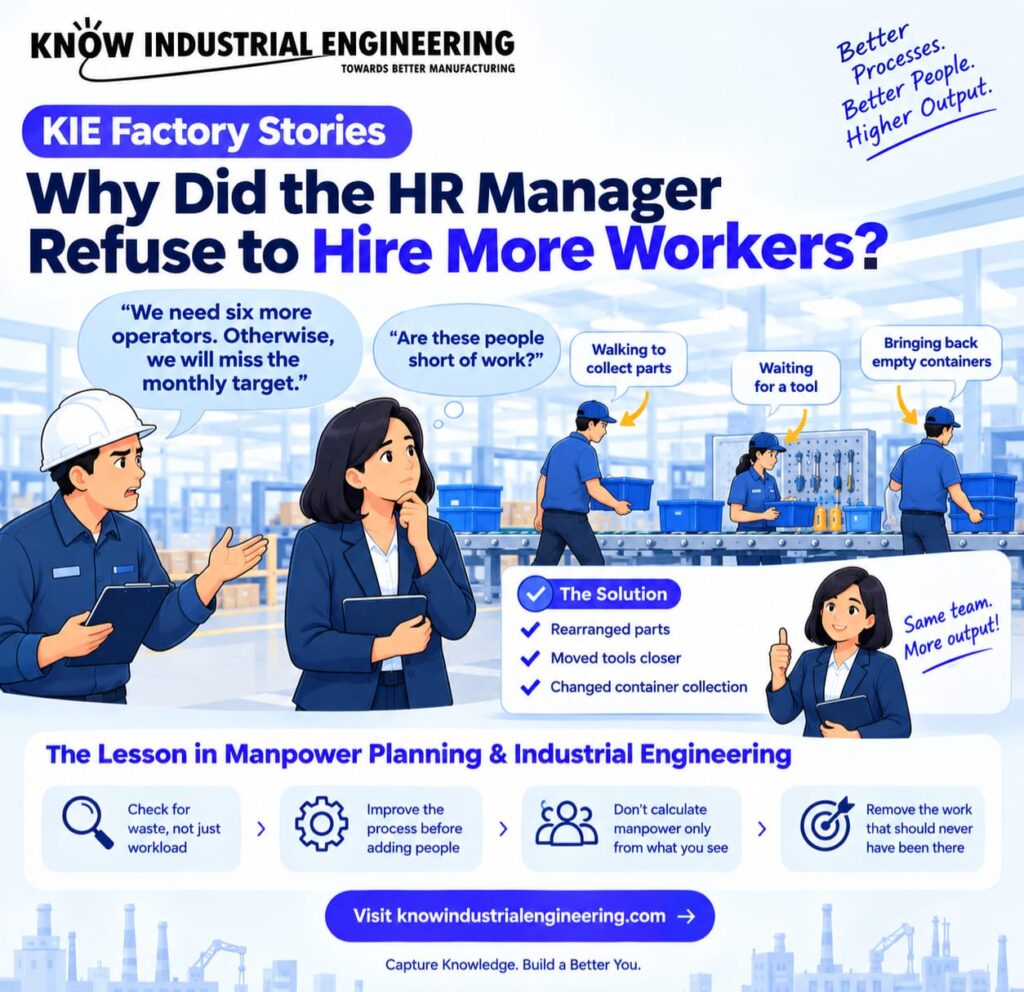
KIE Factory Stories: Why Did the HR Manager Refuse to Hire More Workers?

“We need six more operators. Otherwise, we will miss the monthly target.” The Production Manager was frustrated. Orders were increasing, overtime was rising, and the team was struggling to keep up. HR started preparing the recruitment plan. But before approving it, the HR Manager asked to observe the production line. She watched one operator walk

KIE Factory Stories: Why Did the HR Manager Refuse to Hire More Workers? Read More »

What is a Spaghetti Diagram and How Does It Improve Factory Layout?

What is a Spaghetti Diagram? A Spaghetti Diagram is a visual tool used in Industrial Engineering to map the actual movement of people, materials, or equipment through a workplace. The movement paths often look like tangled spaghetti, revealing unnecessary travel and inefficient layouts. In simple terms Instead of guessing why an operator spends too much

What is a Spaghetti Diagram and How Does It Improve Factory Layout? Read More »

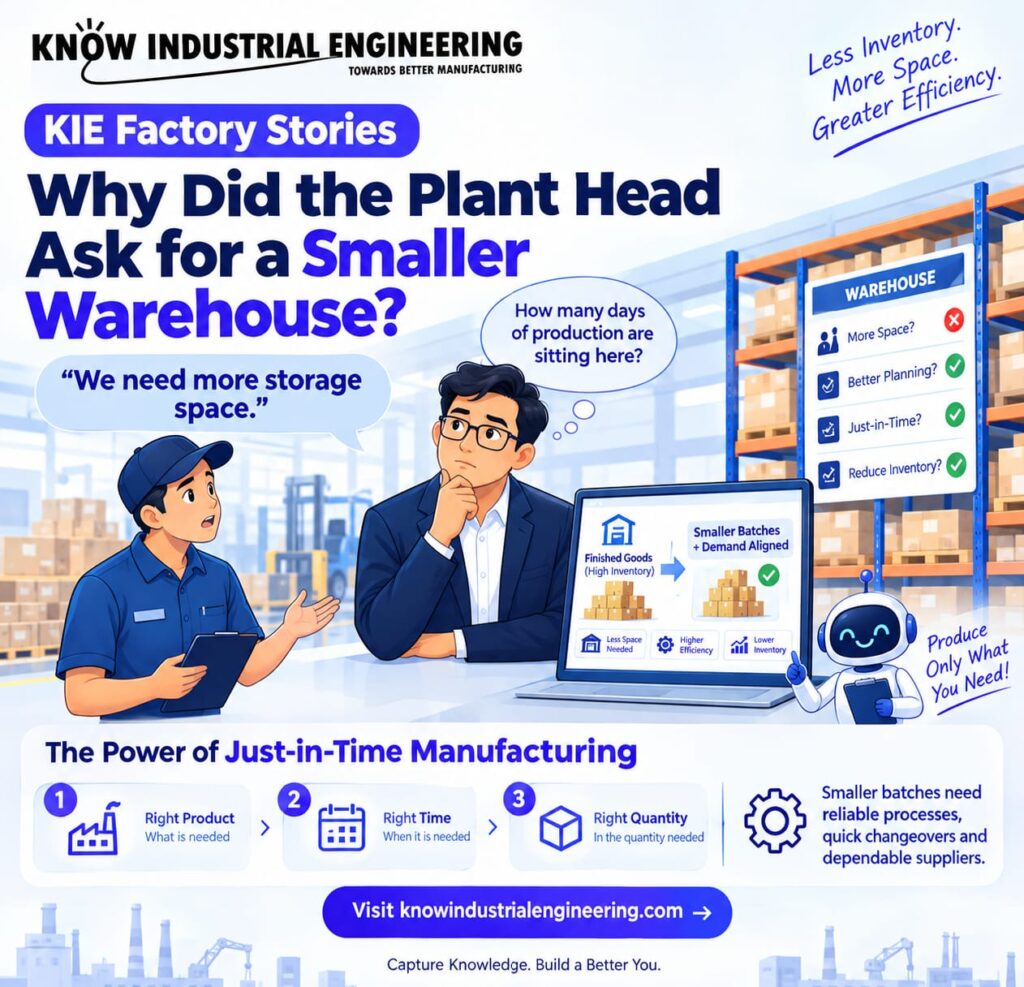
KIE Factory Stories: Why Did the Plant Head Ask for a Smaller Warehouse?

“We need more storage space.” The Warehouse Manager was convinced. Finished goods were filling every available corner. Pallets were blocking aisles, and the team was struggling to find space for incoming material. His solution was simple. Build a bigger warehouse. But the Plant Head asked him to check one number first. “How many days of

KIE Factory Stories: Why Did the Plant Head Ask for a Smaller Warehouse? Read More »

What is Performance Rating in Time Study?

What is Performance Rating? Performance Rating is the assessment of an operator’s working pace compared with a defined normal performance level during a time study. It helps an Industrial Engineer adjust observed time when the operator is working faster or slower than the normal pace. In simple terms If an operator completes a task unusually

What is Performance Rating in Time Study? Read More »

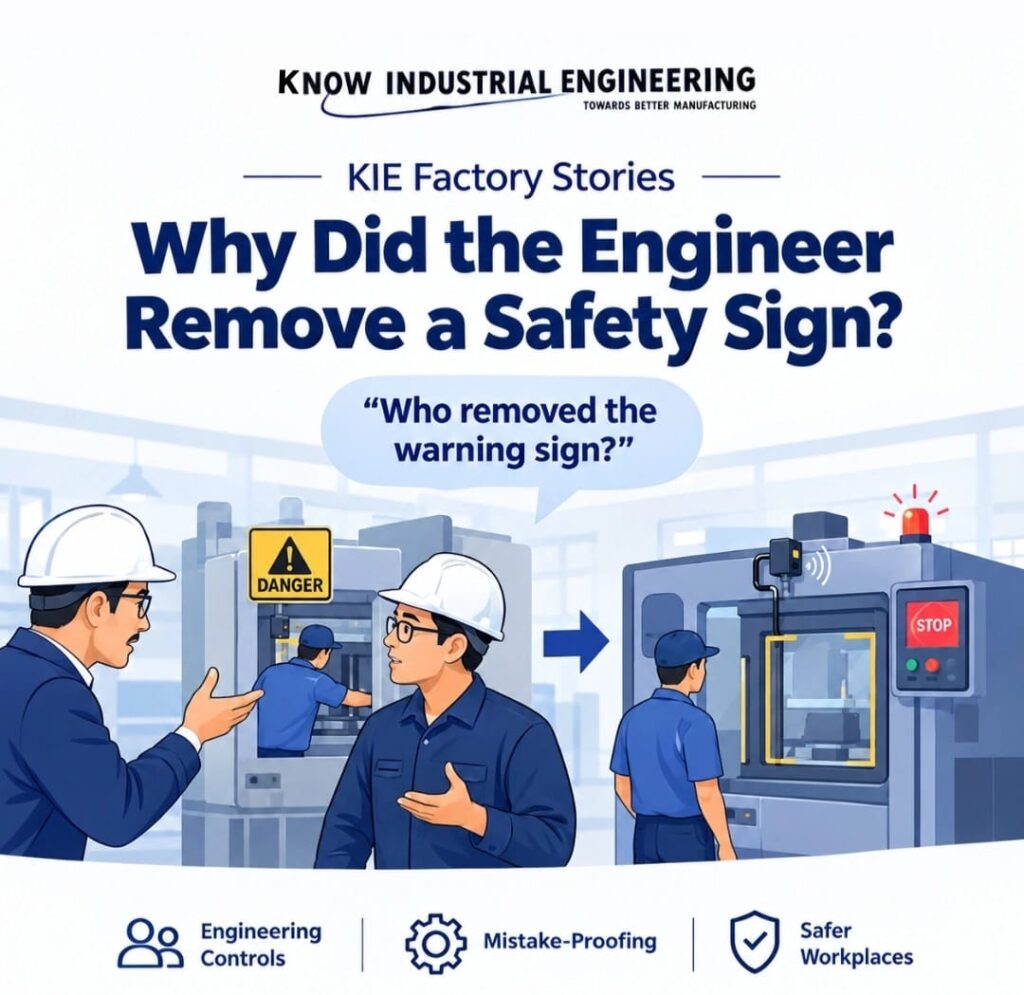
KIE Factory Stories: Why Did the Engineer Remove a Safety Sign?

“Who removed the warning sign?” The supervisor was not happy. The sign had been placed beside a machine after a small hand injury. Everyone knew the area was dangerous. But the sign was gone. The safety engineer had removed it. The supervisor stared at him. “Why would you remove a safety warning?” The engineer pointed

KIE Factory Stories: Why Did the Engineer Remove a Safety Sign? Read More »

What is Standard Time in Industrial Engineering and Why Is It Important?

What is Standard Time? Standard Time is the time allowed to complete a specific task under defined working conditions, including appropriate allowances for fatigue, personal needs, and unavoidable delays. It helps establish a realistic expectation for how long a properly trained operator should take to complete the work. In simple terms If an operator’s observed

What is Standard Time in Industrial Engineering and Why Is It Important? Read More »

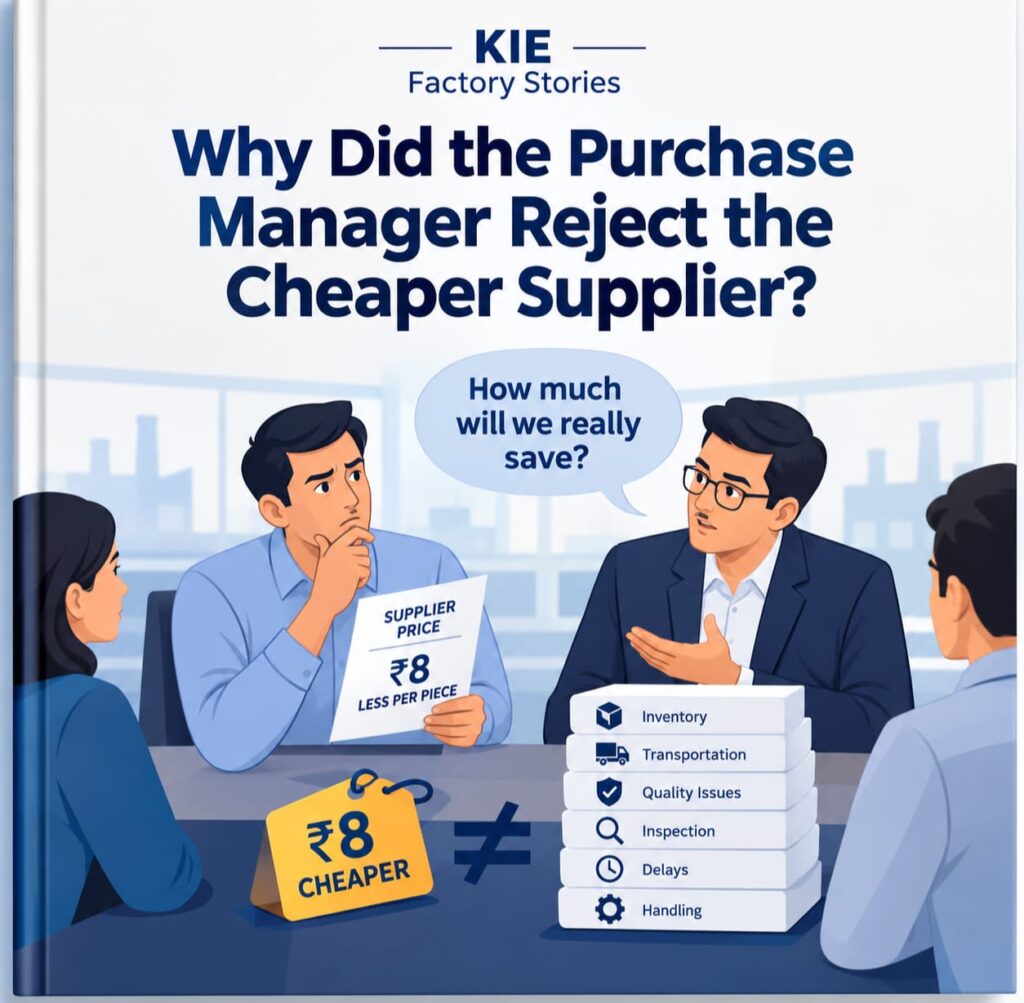
KIE Factory Stories: Why Did the Purchase Manager Reject the Cheaper Supplier?

“We can save ₹8 per piece if we switch suppliers.” The Purchase Manager expected everyone to agree. Instead, the Plant Head asked one question: “How much will we really save?” The supplier’s price was lower. But there was a catch. The new supplier delivered in larger batches. That meant more inventory. Their lead time was

KIE Factory Stories: Why Did the Purchase Manager Reject the Cheaper Supplier? Read More »

What are Value-Added and Non-Value-Added Activities in Manufacturing?

What is a Value-Added Activity? A value-added activity is an activity that changes the product in a way the customer requires and is willing to pay for. Examples: What is a Non-Value-Added Activity? A non-value-added activity consumes time, effort, space, or resources without increasing the value of the product. Examples: Simple Example Consider an assembly

What are Value-Added and Non-Value-Added Activities in Manufacturing? Read More »

Trainings