Joshna Joy

KIE Factory Stories: Why Did the Customer Pay for a Product That the Factory Never Made?

The Finance Manager was reviewing the monthly production report when he noticed something unusual. The factory had purchased enough raw material for 10,000 units. But only 9,200 units had been shipped. “Where are the remaining 800 units?” he asked. The Production Manager checked the records. There were no major quality issues. No unusual machine breakdowns.

KIE Factory Stories: Why Did the Customer Pay for a Product That the Factory Never Made? Read More »

What is a Bill of Materials (BOM) and Why Is It Important in Manufacturing?

What is a Bill of Materials? A Bill of Materials (BOM) is a structured list of all the raw materials, components, subassemblies, and quantities required to manufacture a product. It acts as a product’s ingredient list, helping production, purchasing, stores, and planning teams understand exactly what is needed. In simple terms To manufacture one electrical

What is a Bill of Materials (BOM) and Why Is It Important in Manufacturing? Read More »

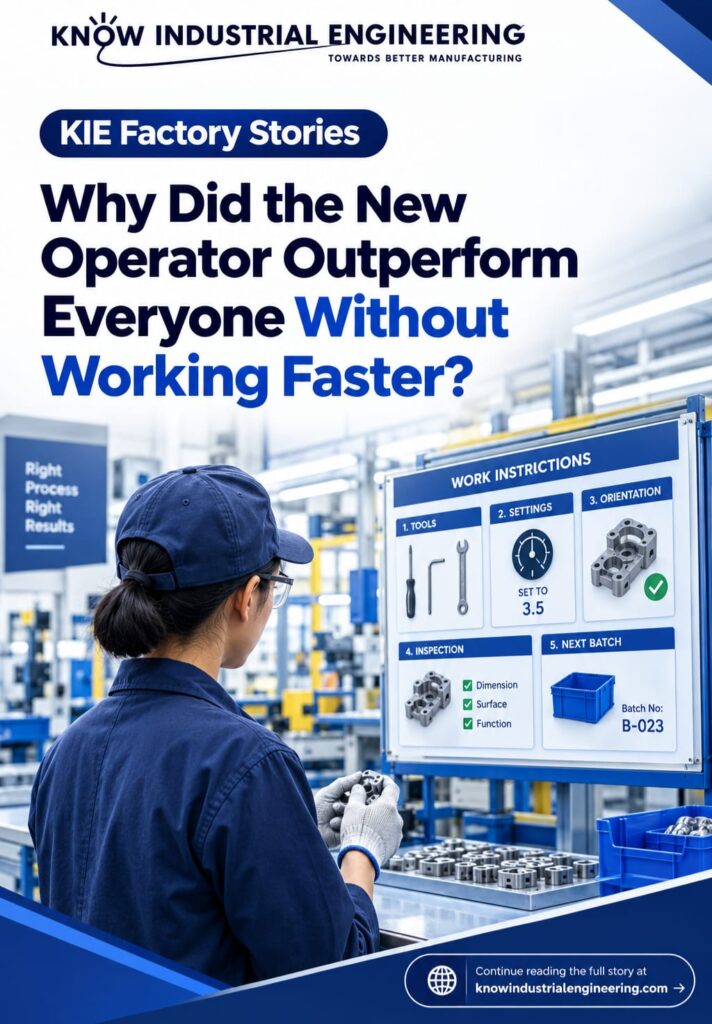
KIE Factory Stories: Why Did the New Operator Outperform Everyone Without Working Faster?

The production supervisor was checking the output board when he noticed something unusual. The newest operator had completed almost as many parts as the factory’s most experienced worker. “How are you doing that?” he asked. The new operator looked confused. “I’m just following the instructions.” The supervisor watched him work. His movements were ordinary. His

KIE Factory Stories: Why Did the New Operator Outperform Everyone Without Working Faster? Read More »

What is a Reorder Point and How Does It Prevent Material Shortages?

What is a Reorder Point? The Reorder Point (ROP) is the inventory level at which a company should trigger a replenishment order to avoid running out of material before new stock arrives. It helps purchasing and production teams decide when to reorder, rather than waiting until inventory is nearly exhausted. In simple terms If a

What is a Reorder Point and How Does It Prevent Material Shortages? Read More »

KIE Factory Stories: Why Did the Supplier Deliver Perfect Parts That the Factory Couldn’t Use?

“The parts passed every inspection. Why is Production rejecting them?” The Purchase Manager was frustrated. The supplier had delivered 2,000 precision-machined components. Every dimension was within specification. The inspection report was clean. Yet the Production Manager refused to release the parts to the assembly line. The Purchase Manager called the supplier. “You’ve met every requirement

KIE Factory Stories: Why Did the Supplier Deliver Perfect Parts That the Factory Couldn’t Use? Read More »

What is Safety Stock and Why Is It Important in Manufacturing?

What is Safety Stock? Safety stock is the extra inventory maintained to protect production against unexpected demand increases, supplier delays, or variations in material consumption. It acts as a buffer when actual conditions differ from the plan. In simple terms A factory normally consumes 100 components per day. If a supplier delivers late, the factory

What is Safety Stock and Why Is It Important in Manufacturing? Read More »

KIE Factory Stories: Why Did the Supervisor Stop Praising His Best Team?

“Another record! You have beaten last month’s production target.” The Plant Head was delighted. The assembly team had increased its daily output by 18%. The supervisor expected a bonus announcement. Instead, the Plant Head asked for the dispatch report. The numbers told a different story. Production was up 18%. But customer deliveries were almost unchanged.

KIE Factory Stories: Why Did the Supervisor Stop Praising His Best Team? Read More »

What is Material Handling and How Does It Improve Factory Productivity?

What is Material Handling? Material handling is the movement, storage, protection, and control of materials throughout manufacturing, from receiving raw materials to dispatching finished products. It includes every movement of components between machines, workstations, storage areas, and inspection points. In simple terms A component may be handled several times before it becomes a finished product.

What is Material Handling and How Does It Improve Factory Productivity? Read More »

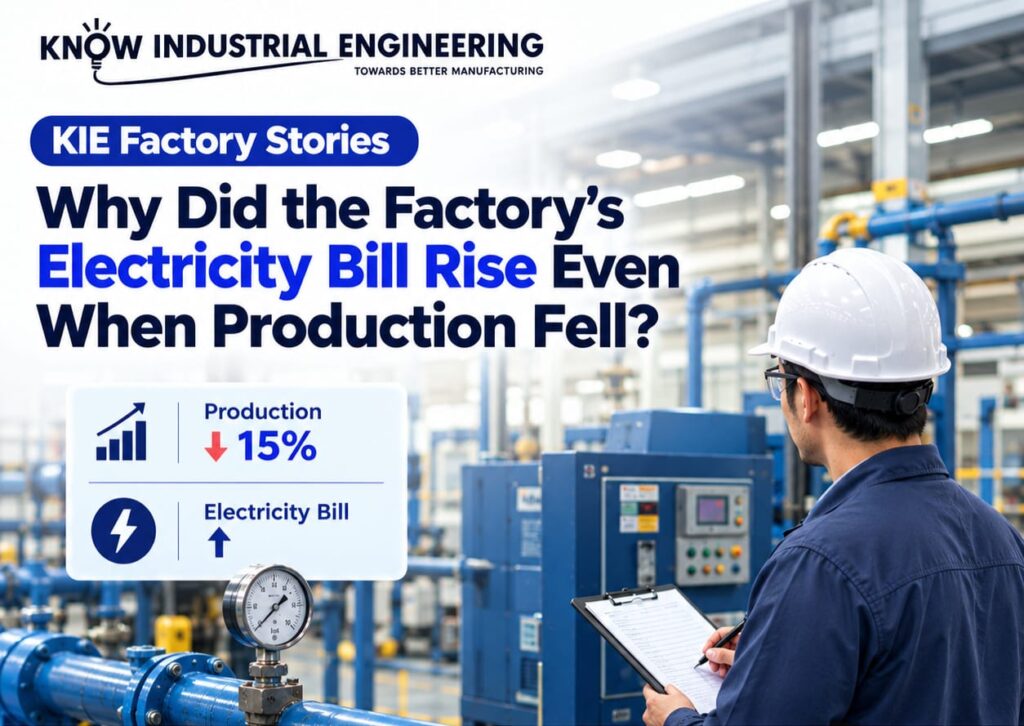
KIE Factory Stories: Why Did the Factory’s Electricity Bill Rise Even When Production Fell?

“We produced fewer parts this month. Why is our electricity bill higher?” The Plant Head looked at the energy report. Production had dropped by 15%. But electricity consumption had increased. The Maintenance Manager blamed an old compressor. The Production Manager blamed longer shifts. Neither explanation fully matched the numbers. An energy engineer decided to investigate

KIE Factory Stories: Why Did the Factory’s Electricity Bill Rise Even When Production Fell? Read More »

What is a FIFO Lane and Why Is It Important in Production?

What is a FIFO Lane? FIFO stands for First In, First Out A FIFO lane is a controlled buffer area where materials or products move in sequence, ensuring that the items entering first are processed or used first. It helps maintain production flow and prevents work from accumulating without control. In simple terms Imagine Station

What is a FIFO Lane and Why Is It Important in Production? Read More »

Trainings