

OEE is a measure of how well a planned production time of an equipment is utilized to produce good products. It can be measured from 0% to 100%.
Its not only the equipment, effectiveness of achieving target number of good products, of all operations, whether it is manual, automatic or semiautomatic can be measured using OEE.
Now we shall discuss all factors which will affect OEE.
OEE Factors
OEE depends on three major factors.
- Availability
- Performance
- Quality
We will be discussing these three factors in the following sections…
How to calculate OEE
We can calculate OEE by two methods. One is very simple and less data is required. The other one requires more data, but for improving OEE we prefer second method since it has more data.
Lets move into detail…
OEE calculation – Method 1
Following formula is used for calculating OEE in this method.
OEE = (Total no of good products produced × cycle time) / Planned production time
But in this method, we did’t get an idea of which three factors of OEE is lagging behind. Only after knowing this information, we can improve those factors.
But for quick calculation we can use this method.
OEE calculation – Method 2
Initially we need to calculate three factors, Availability, Performance and quality.
And finally OEE is calculated by multiplying these three OEE factors.
Lets look in to these factors, in detail…
Availability
Availability factor is the measure of how well a planned production time is used for producing products.
Availability is calculated by the following formula,
Availability = Run time / Planned production time
Run Time is obtained by reducing idle time from Planned production time.
Run Time = Planned production time − Idle time
Idle time is the time for which machine is not running. This can be due to breakdown, material shortage, power failure, change over, etc.
Performance
Performance factor is a measure of how well a machine is able to maintain its cycle time for producing parts.
Performance factor is calculated by following formula,
Performance = (Cycle Time × Total products produced) / Run Time
Cycle time can be calculated by time study.
Quality factor
Quality factor measures how well a machine is able to produce good parts.
Quality factor is calculated by following formula,
Quality factor = No of good products produced / Total no of products produced
OEE calculation
OEE is calculated by multiplying the above three factors
OEE = Availability × Performance × Quality
If the equations for Availability, Performance, and Quality are substituted in the above and reduced to their simplest terms the result is:
OEE = (No of good products produced × Cycle Time) / Planned Production Time
OEE calculation Example
Now let’s walk through a complete example using the method 2 of OEE calculation. Here is data recorded for the first shift:
| Element | Time |
| Duration of shift | 480 minutes |
| Total break duration | 2 nos 15 minute tea breaks and 30 minute lunch break |
| Downtime | 55 minutes |
| Cycle Time | 40.0 seconds |
| Total no of parts produced | 490 products |
| Total no of parts rejected | 40 products |
Initially we need to calculate the following …
Planned production time
Formula for calculating planned production time is,
Duration of shift − Total break duration
480 minutes − 60 minutes = 420 minutes
Run time
The next step is to calculate the amount of time that production was actually running.
The formula is,
Run Time = Planned production time − Idle time
= 420 minutes − 55 minutes
= 365 minutes
No of good products produced
No of products produced = Total products produced − Total rejected nos
= 490 products − 40 products
= 450 products
Availability
Availability = Run Time / Planned Production Time
= 365 minutes / 420 minutes
= 0.869 (86.90%)
Performance
Performance = (Cycle Time × Total products produced) / Run Time
= (40.0 seconds × 490 ) / (365 × 60 seconds)
= 0.895 (89.5%)
Quality factor
Quality factor = No of good products produced / Total no of products produced
= 450 / 490
= 0.9183 (91.83%)
OEE CALCULATION
Finally, OEE is calculated by multiplying the three OEE factors.
Availability × Performance × Quality
= 0.869 × 0.895 × 0.9183
= 0.7142 (71.42 %)
OEE can also be calculated using a simple method (method 1).
Formula is,
OEE = (Total no of good products produced × cycle time / Planned production time
= (450 products × 40.0 seconds) / (420 minutes × 60 seconds) = 0.7142 (71.42%)
The result is the same in both cases. The OEE for this shift is 71.42%.
Thanks for reading
I am thankful to Mr. Abin Antony for contributing to this article.
If you know any subject that can be related to manufacturing industry or industrial engineering, you can earn some income by becoming article contributor of this website. For knowing more about it, please visit Join us page.
You don’t need to have any experience in article writing, just knowledge on the subject is needed.
Also you can know more about our team of article contributors by visiting the about us page.
About the Article Contributor

Visit his LinkedIn profile, for knowing more about him
Latest Articles from Know Industrial Engineering
- Stories from the Factory Floor #04The customer called three times. Same complaint. Advertisement “The product is good, but it is difficult to use.” Quality checked the product. It passed every test. Production checked the process. Everything was within standard. Engineering checked the drawings. No problem there either. So the team visited the customer. They watched how the product was actually being used. Within ten minutes, they saw it. The operator had to turn the product around three times before he could install it. Every customer was doing the same thing. The product had been designed to be manufactured easily. Nobody had asked whether it was… Read more: Stories from the Factory Floor #04
- What are Manufacturing KPIs and Why Are They Important?What is a Manufacturing KPI? A Manufacturing KPI (Key Performance Indicator) is a measurable value used to understand how effectively a manufacturing process is performing. Advertisement KPIs turn production performance into data that can be monitored and improved. In simple terms Instead of saying: “Production seems slow.” A KPI helps quantify it: Output = 8,500 units Now the team has measurable information to investigate. Common Manufacturing KPIs OEE Overall equipment effectiveness Cycle Time Time required to produce one unit Productivity Output compared with resources used First Pass Yield Units passing without rework Availability Percentage of planned time equipment is available… Read more: What are Manufacturing KPIs and Why Are They Important?
- Stories from the Factory Floor #03“Don’t change anything.” That was the instruction from the Production Manager. Advertisement The line had been running for years. Same machines. Same layout. Same work method. Same problems. One young engineer noticed that operators were making the same small adjustment almost every hour. She asked why. An operator replied: “Because the machine doesn’t work properly without it.” “How long have you been doing this?” “About three years.” The engineer checked the machine settings. The adjustment was never part of the standard work. It existed only because operators had learned to compensate for the problem. The team finally fixed the root… Read more: Stories from the Factory Floor #03
- What is Performance Rate and Why Is It Important in Manufacturing?What is Performance Rate? Performance Rate measures how fast a machine or production process operates compared with its ideal or planned production speed while it is running. Advertisement It helps answer: “When the machine is running, is it producing as fast as it should?” In simple terms A machine may be available for production but still run slower than its ideal cycle time. For example: Ideal cycle time = 1 minute/unit If the machine runs for 400 minutes, ideal output would be: 400 units But actual output is only 360 units. Performance Rate: 360 ÷ 400 × 100 = 90%… Read more: What is Performance Rate and Why Is It Important in Manufacturing?
- Stories from the Factory Floor #02“Why are we producing this?” Nobody answered. Advertisement The Production Manager looked at the planning sheet. The order was approved. The material was available. The machine was ready. So production continued. Two days later, the finished products were sitting in the warehouse. Nobody was asking for them. The Planning Manager checked the customer order. The customer had changed the requirement three weeks earlier. But the old plan was never updated. The factory had spent: And produced something the customer no longer needed. Nothing had gone wrong on the shop floor. The machines worked. The operators worked. Quality was good. The… Read more: Stories from the Factory Floor #02
- What is Quality Rate and Why Is It Important in Manufacturing?What is Quality Rate? Quality Rate measures the proportion of produced units that meet the required quality standards compared with the total units produced. Advertisement It helps answer: “How much of what we produced was good without being rejected?” In simple terms If a process produces 1,000 units and 30 units are defective: Good units = 970 Quality Rate: 970 ÷ 1,000 × 100 = 97% Simple Example A production line produces: 2,000 units Out of these: Quality Rate: 1,940 ÷ 2,000 × 100 = 97% The remaining 3% represents units requiring rejection, rework, or other disposition depending on the… Read more: What is Quality Rate and Why Is It Important in Manufacturing?
- Stories from the Factory Floor #01“We don’t have it.” The Plant Head thought he had heard wrong. Advertisement “What do you mean?” “One component is out of stock.” The entire production line was ready. Operators were waiting. Machines were ready. Orders had to be shipped. The missing component? It cost less than ₹20. “Check the warehouse.” Nothing. “Check incoming material.” Nothing. “Call the supplier.” The delivery would arrive only in the afternoon. A tiny ₹20 component was now stopping products worth lakhs from being produced. The Purchase Manager pointed to the inventory report. Inventory had actually reduced. On paper, that looked like an improvement. But… Read more: Stories from the Factory Floor #01
- What is Voice of the Customer (VOC) and Why Does It Matter in Manufacturing?What is Voice of the Customer? Voice of the Customer (VOC) is the process of collecting and understanding customer needs, expectations, requirements, and feedback. Advertisement It helps manufacturers understand what customers actually value not just what the company assumes they value. In simple terms A customer may say: “I need faster delivery.” But the real requirement may be: VOC helps convert customer statements into measurable requirements. Simple Example Suppose customers frequently complain about product delivery. Instead of simply recording: “Customers are unhappy with delivery.” The company can identify measurable requirements: Now the manufacturing team has something it can measure and… Read more: What is Voice of the Customer (VOC) and Why Does It Matter in Manufacturing?
- What is PMTS and How Can It Help Determine Standard Time?What is PMTS? PMTS stands for Predetermined Motion Time System. Advertisement It is a work measurement technique used to determine the time required to perform a task by analyzing the basic human motions involved, rather than measuring the entire task repeatedly with a stopwatch. In simple terms Instead of asking: “How long did this operator take?” PMTS asks: “What motions are required to complete this job, and how much standard time should those motions take?” Simple Example Consider a simple assembly task: Each motion can be assigned a predetermined time value. The individual motion times are then combined to estimate… Read more: What is PMTS and How Can It Help Determine Standard Time?
- What is Heijunka and How Does Production Leveling Improve Factory Flow?What is Heijunka? Heijunka is a Lean manufacturing method used to level production volume and product mix over time. Advertisement Instead of allowing demand fluctuations to create highly uneven production schedules, the goal is to create a smoother and more predictable workload. In simple terms Imagine customer demand requires: A factory could produce all of A first, then B, then C. Heijunka encourages a more balanced sequence, such as producing smaller quantities of different products repeatedly. Simple Example Instead of: AAAAAA → BBB → C A leveled sequence could look more like: A → A → B → A →… Read more: What is Heijunka and How Does Production Leveling Improve Factory Flow?
- What is Production Mix and Why Does It Matter in Manufacturing?What is Production Mix? Production Mix refers to the combination and quantity of different products a factory produces during a specific period. Advertisement A factory may have enough total capacity, but the product mix can still create a capacity problem. In simple terms Suppose a factory produces: 🔹 Product A🔹 Product B🔹 Product C Each product may require different: Therefore, producing 1,000 units of Product A is not necessarily equivalent to producing 1,000 units of Product B. Simple Example A machine has 480 minutes/day available. Product A requires 2 minutes/unit.Product B requires 5 minutes/unit. If the daily requirement is: A… Read more: What is Production Mix and Why Does It Matter in Manufacturing?
- What is Production Planning and Control (PPC) and Why Is It Important?What is Production Planning and Control? Production Planning and Control (PPC) is the process of deciding what to produce, how much to produce, when to produce it, and how to control the production process to meet customer requirements. Advertisement In simple terms PPC connects: Customer Demand → Production Plan → Materials → Machines → Manpower → Production → Delivery Simple Example A company receives an order for 10,000 units to be delivered in 10 days. PPC needs to determine: If the required output is 1,000 units/day but the available capacity is only 800 units/day, the gap must be identified before… Read more: What is Production Planning and Control (PPC) and Why Is It Important?
- What is Queue Time and How Does It Affect Manufacturing Lead Time?What is Queue Time? Queue Time is the time a job spends waiting before the next operation can begin. Advertisement The product is not being processed during this period it is simply waiting. In simple terms Manufacturing time can include: Processing Time + Waiting Time + Movement Time + Inspection Time A product may require only 30 minutes of actual processing but spend several hours waiting between operations. Simple Example A component requires: Actual processing time = 60 minutes Total elapsed time = 270 minutes So the product spends much more time waiting than being processed. Why It Matters Excessive… Read more: What is Queue Time and How Does It Affect Manufacturing Lead Time?
- What is Downtime Analysis and How Can It Improve Production?What is Downtime Analysis? Downtime Analysis is the systematic study of when, why, and how long production equipment or processes remain unavailable for production. Advertisement Instead of simply recording: “Machine stopped for 2 hours.” Industrial Engineers investigate: “Why did it stop, how often does it happen, and what is causing the biggest loss?” In simple terms Not all downtime has the same cause. It may be due to: Simple Example A machine loses 120 minutes in one shift: Instead of treating all 120 minutes as one loss, the team can identify where the largest improvement opportunity exists. Why it matters… Read more: What is Downtime Analysis and How Can It Improve Production?
- What is Resource Utilization and Why Does It Matter in Manufacturing?What is Resource Utilization? Resource Utilization measures how effectively available manufacturing resources are being used compared with their available capacity. Advertisement Resources can include: In simple terms If a machine is available for 8 hours but actually produces for only 6 hours, its utilization is: 6 ÷ 8 × 100 = 75% The remaining 25% represents time that needs further investigation. Simple Example A production line has: Available time: 480 minutes/shiftActual productive time: 400 minutes Utilization: 400 ÷ 480 × 100 = 83.3% The important question is not simply why utilization is 83.3%. It is: “What happened to the remaining… Read more: What is Resource Utilization and Why Does It Matter in Manufacturing?
- Revisiting my Production Engineering subjects: SCT College, 2006–2010
 By Melvin Vincent In 2006, I joined Sree Chitra Thirunal College of Engineering, Trivandrum, to pursue B.Tech in Mechanical Engineering, Production Engineering stream, under the University of Kerala. I graduated in 2010. Advertisement Years later, I feel like opening those books again. Some lessons have stayed with me; others need a little refreshing. I am listing my subjects here, semester by semester, to reconnect with the learning that helped shape me as an engineer. Perhaps you will find a little of your own college days in this list too. Semesters I and II: The foundation Our first and second semesters… Read more: Revisiting my Production Engineering subjects: SCT College, 2006–2010
 - Elon Musk Says Money Won’t Matter in the Future. Is It Already Happening?Elon Musk has repeatedly discussed a future where AI and robotics could create such enormous productivity that many goods and services become extremely abundant. It sounds difficult to imagine. Advertisement But look at the past. We may already have experienced smaller versions of the same transformation. Things That Once Cost Money but Are Now Almost Free Photography: Every photograph once required film and development. Today, taking another 1,000 photos on your phone costs practically nothing. Communication: International calls were once expensive. Today, we can make video calls across the world through the internet at almost no additional cost. Knowledge: Families… Read more: Elon Musk Says Money Won’t Matter in the Future. Is It Already Happening?
- What leads to recent 4.3 Million EVs Recall – An analysisIn August 2026, nine vehicle manufacturers announced recalls covering approximately 4.276 million electric vehicles in China. The recalls centred on a safety mechanism that was already present in the affected vehicles: the mechanical emergency door release. This was not simply a case of millions of defective door latches. The concern arose from what could happen during a serious collision, when several conditions occurred in sequence. Advertisement Under normal conditions, occupants open the doors electronically. A severe collision, however, can interrupt the vehicle’s low-voltage electrical supply. The electronic release may then become unavailable, leaving the occupant dependent on a separate mechanical… Read more: What leads to recent 4.3 Million EVs Recall – An analysis
- Understand how money works through This story of Adam and BenImagine Earth thousands of years ago. There is only one man. Let’s call him Adam. Advertisement Adam wakes up hungry. He catches a fish. He eats it. Later, he wants shelter. So he cuts some wood and builds a small hut. He wants water. He walks to the river and collects it. There is no money. And Adam doesn’t feel poor. Why? Because money has absolutely no meaning to him. If you gave Adam ₹1 crore, he might use the notes to start a fire. What Adam actually wants is food, shelter, water and safety. Then one day, another man… Read more: Understand how money works through This story of Adam and Ben
- Mukesh Ambani’s Three Success Rules Every Manufacturing Professional Should FollowManufacturing professionals are trained to solve problems. A machine stops, we restore it. A line misses its target, we rebalance it. Rejection increases, we search for the root cause. Yet one important problem often remains unattended: Are we building only a successful process, or are we also building a successful career? Many capable engineers spend years improving products, machines and factories but give very little attention to the direction of their own professional growth. They become excellent at meeting today’s targets without preparing themselves for tomorrow’s opportunities. Advertisement This is why three success principles shared by Mukesh Ambani are especially… Read more: Mukesh Ambani’s Three Success Rules Every Manufacturing Professional Should Follow
- Neuralink Blindsight: When the Brain Becomes the DisplayFor most of human history, vision has followed one path: light enters the eyes, the eyes convert it into signals, and the brain interprets those signals. Neuralink’s Blindsight is exploring a radically different possibility: What if visual information could reach the brain without depending on the eyes? Advertisement That idea makes Blindsight much more than a technology for restoring vision. If it succeeds and develops over time, it could become an early step toward a completely different relationship between humans, computers and machines. What is Neuralink Blindsight? Blindsight is a brain-computer interface being developed by Neuralink with the goal of… Read more: Neuralink Blindsight: When the Brain Becomes the Display
- Factories are going to change anyway – Before that change yourselfWalk into a factory today and you may see operators filling production sheets, supervisors updating Excel files, engineers conducting time studies with stopwatches, planners manually changing schedules, quality teams maintaining separate records, and managers waiting until the next morning to understand what actually happened on the shop floor. Much of this may still look normal. Advertisement But it will not remain normal forever. Manufacturing is entering a period where the way factories are planned, operated, monitored, maintained, and improved will change significantly. Artificial intelligence, connected machines, digital work instructions, manufacturing execution systems, machine vision, autonomous material movement, predictive maintenance, robotics,… Read more: Factories are going to change anyway – Before that change yourself
- Edge AI in Manufacturing: How Factories Make Intelligent Decisions Without Depending on the CloudEdge AI brings artificial intelligence closer to factory machines, cameras, sensors and production processes. Explore how it works, where it can be used and what manufacturers should evaluate before implementation.
- What Is Culture Actually? A Simple Explanation With Real Workplace ExamplesMany people think culture means company values, motivational posters, annual day celebrations, team photos, or a statement written on the office wall. But culture is much deeper than that. Advertisement Culture is not what a company says. Culture is what people actually do every day. In simple words: Culture is the repeated behavior of people inside a workplace. It is how people speak, decide, react, support, blame, solve problems, and behave when nobody is watching. Culture Is What People Accept and Repeat A company may say, “Quality is our priority.” But if defective parts are allowed to move forward just… Read more: What Is Culture Actually? A Simple Explanation With Real Workplace Examples
- Self Respect – You May Be Forgotten, But Do Not Forget YourselfThere is a powerful meaning behind the line: “You will be forgotten either way. So live in such a manner that, while you remain, you belong to yourself.” Advertisement At first, it may sound negative. But actually, it is a very practical reminder for life and career. Do Not Live Only for Recognition Most people spend a large part of their life trying to be accepted, praised, promoted, noticed, or remembered. Professionals do this too. We try to build a good image, impress seniors, satisfy customers, grow our business, and prove our value to others. There is nothing wrong with… Read more: Self Respect – You May Be Forgotten, But Do Not Forget Yourself
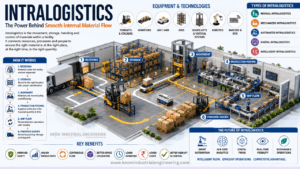
- IntralogisticsIn manufacturing, people often talk about production, quality, maintenance, automation and supply chain. But there is one area that quietly decides the speed of the entire factory: intralogistics. A factory may have good machines, skilled operators and proper planning. Still, if materials are not available at the right place, in the right quantity and at the right time, production will suffer. Operators will wait. Machines will stay idle. WIP will pile up. Space will become congested. Dispatches will get delayed. Advertisement This is where intralogistics becomes important. What Is Intralogistics? Intralogistics means the movement, storage, handling and control of materials… Read more: Intralogistics
- 3PL Ecommerce in ManufacturingManufacturing is no longer only about producing goods and sending them to distributors. Today, many manufacturers are also selling directly to customers, dealers, retailers, and online buyers through ecommerce platforms. This shift has created a new challenge: how can a manufacturer manage storage, order picking, packing, shipping, and returns without disturbing core production activities? This is where 3PL ecommerce becomes important. Advertisement 3PL ecommerce means using a third-party logistics provider to handle ecommerce fulfillment activities. Instead of the manufacturer managing every online order from its own factory or warehouse, a 3PL partner stores the finished goods, picks customer orders, packs… Read more: 3PL Ecommerce in Manufacturing
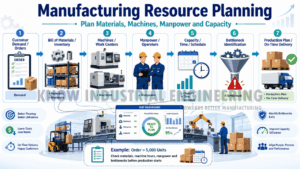
- Manufacturing Resource PlanningManufacturing Resource Planning is one of the most important activities in any factory. A factory may have machines, manpower, materials, tools, space and orders, but if these resources are not planned properly, production will still suffer. Many factories face the same problems every day. Advertisement Material is not available when production needs it.Machines are overloaded in one area and idle in another area.Manpower is arranged at the last minute.Production plans change frequently.Customer delivery dates are missed even when people are working hard. Most of these problems are not only production problems. They are planning problems. This is where Manufacturing Resource… Read more: Manufacturing Resource Planning
- AI and Lean six sigma
 This article is written by Shivani Kadam. She is experienced in Project Management. Walk into any manufacturing plant today and you will find two parallel conversations happening, related to AI and Lean six sigma. Advertisement The first is familiar. Teams are discussing scrap reduction, line balancing, cycle time improvements, OEE losses, and corrective actions. Whiteboards are filled with Pareto charts, fishbone diagrams, and action trackers. Lean Six Sigma continues to be the language of operational excellence. The second conversation is newer. It revolves around machine learning models, digital twins, predictive maintenance, computer vision, and generative AI. For many organizations, these… Read more: AI and Lean six sigma
 - Manufacturing Execution System: Meaning, Benefits, and Why Factories Need ItIn manufacturing, every minute matters. A machine waiting for material, an operator waiting for instruction, a supervisor searching for production status, or a planner working with outdated data can silently reduce factory performance. Many factories invest in machines, manpower, and materials, but still struggle because the information flow inside the factory is not clear. Advertisement This is where a Manufacturing Execution System, commonly known as an MES system, becomes important. A manufacturing execution system helps a factory control, track, and improve production activities in real time. It connects planning with actual shop floor execution and gives better visibility to managers,… Read more: Manufacturing Execution System: Meaning, Benefits, and Why Factories Need It
- When Roles Are Clear, a Factory Feels Like Heaven to Work InA factory is not just a building filled with machines, materials, tools, and people. It is a living system. Advertisement Every person, every department, every process, and every decision is connected. When one part is unclear, the whole system starts feeling heavy. But when roles and responsibilities are clearly defined, something beautiful happens. Work becomes peaceful. People know what they own.Teams know where to act.Leaders know whom to support.Problems know where to go. That is when a factory starts feeling less like a place of daily pressure and more like a place of professional discipline. In simple words, a factory… Read more: When Roles Are Clear, a Factory Feels Like Heaven to Work In
- How to Calculate the Number of Observations Required for Time StudyTime study is one of the most important activities in industrial engineering. It is the foundation for manpower calculation, capacity planning, line balancing, costing, incentive calculation, and productivity improvement. But in many factories, time study is misunderstood. Advertisement Some people take 3 readings and decide the cycle time.Some people take 5 readings and calculate manpower.Some take one “average-looking” reading and use it for planning.Some take more readings only when someone questions the result. This creates a serious problem. If the observed time is not reliable, the standard time will not be reliable. If the standard time is not reliable, manpower… Read more: How to Calculate the Number of Observations Required for Time Study
- Manpower Calculation Software for ManufacturingManpower Calculation Software for Manufacturing: Why Factories Need a Smarter Way to Plan People In manufacturing, manpower is not just a number. It directly affects production output, delivery performance, overtime cost, machine utilization, line efficiency, and customer satisfaction. Advertisement Many factories still calculate manpower requirements manually using Excel sheets, assumptions, old standard times, or last month’s experience. This may work for small production volumes, but when product mix changes, demand fluctuates, or multiple operations are involved, manual manpower planning becomes slow and unreliable. This is where manpower calculation software for manufacturing becomes important. It helps factories calculate how many people… Read more: Manpower Calculation Software for Manufacturing
- Manpower Planning SampleManpower planning is one of the most important activities in manufacturing. If manpower is planned wrongly, the factory may face production delays, excess labour cost, poor line balance, overtime, or underutilization of people. Many companies still plan manpower based on experience or rough assumptions. But for better productivity, manpower should be planned using proper data such as demand, cycle time, available working time, efficiency, absenteeism, and production method. Advertisement Free Excel Template Download Manpower Planning Sample Template Use this Excel template to practice manpower planning calculation with demand, standard time, available time, efficiency, MAF, yield, and required manpower. Includes sample… Read more: Manpower Planning Sample
- Factory Productivity Improvement Tools: The Smarter Way to Improve Manufacturing PerformanceIn modern manufacturing, productivity is no longer improved by effort alone. It improves when factories use the right systems, tools, and data to make faster and better decisions. This is why factory productivity improvement tools are becoming essential for manufacturers that want to reduce inefficiencies, improve output, and stay competitive. Looking for factory productivity improvement tools? Discover how Factovare helps manufacturing teams improve productivity through automated calculations, better planning, bottleneck analysis, and faster decision-making. Advertisement Explore Factovare Many factories still lose valuable time because of manual calculations, disconnected data, delayed decisions, and poor visibility across operations. These issues directly affect… Read more: Factory Productivity Improvement Tools: The Smarter Way to Improve Manufacturing Performance
- Industrial Engineering Is Entering Its Golden Hour – Here’s What’s Really Changing
 This article is written by Shivani Kadam. She is experienced in Project Management. For years, Industrial Engineering was seen as the field that kept factories running smoothly, cuts waste and made workflows cleaner. Important work, yes but honestly, it often stayed behind the scenes. In this article lets discuss how Industrial Engineering is entering its golden hour. Advertisement But something interesting is happening right now. Technology is reshaping industries faster than any management philosophy ever did – AI in operations, sensor-packed machines, robotics that learn, supply chains that “feel” disruptions before they hit. And suddenly, Industrial Engineers are finding themselves… Read more: Industrial Engineering Is Entering Its Golden Hour – Here’s What’s Really Changing
 - How AI is quietly reshaping Industrial EngineeringThis article is written by Shreya Desai. She is experienced in Process improvement. Let’s discuss about Artificial Intelligence and Industrial Engineering. Advertisement Over the past few years, I’ve noticed something interesting on the shopfloors….It’s not loud.It’s not flashy.It’s not even obvious at first glance. But you can feel it. AI is slipping into industrial engineering, and not with a big announcement, but with small, almost unnoticed changes that build up over time. One day you’re entering cycle time data manually, and the next day your dashboard is magically updated before you’ve even reached the plant. And because these changes arrive… Read more: How AI is quietly reshaping Industrial Engineering
- Career transition from automotive to solar module manufacturingThis article is written by Ashish Gaurav Chaturvedi. Ashish is Operations & Production professional. Here we will be discussing Career transition from automotive to solar module manufacturing. I started my professional journey in the automotive industry. My role involved working on production lines, quality control, design for manufacturing, and taking part in continuous improvement efforts. Automotive taught me precision, discipline, lean practices, and how important it is for processes to be reliable, repeatable and efficient. Advertisement Today, I’m applying those same fundamentals in a different field: solar module manufacturing. The shift has introduced new technologies, environmental considerations, and an exciting… Read more: Career transition from automotive to solar module manufacturing
- Adaptive Project Management in an Uncertain EconomyThis article is written by Shivani Kadam. She is experienced in Project Management. Adaptive project management is, moving towards the right or desired outcome, even if the path turned into something completely different from the original plan. Advertisement I once ran a project that looked flawless from the outside, the kind you’d happily showcase in a quarterly review.Every milestone was on track. The budget was behaving. We even had that rare thing: a genuinely happy steering committee. Then one morning, I got an email I still remember.Our main supplier – the one we’d spent months onboarding – had pulled out.… Read more: Adaptive Project Management in an Uncertain Economy
- How Value Stream Mapping Uncovered a Hidden Defect on the LineThis article is written by Shreya Desai. She is experienced in Process improvement. In a manufacturing plant, not all problems make noise. Some hide in plain sight. Idle operators, partially filled racks, or a batch of components waiting for someone to notice them. These quiet signs are symptoms of process inefficiencies that cost time, money, and quality. Uncovering them requires more than just reports, you need real insights from the ground. You need to see the flow. With this introduction in mind we shall discuss how Value Stream Mapping (VSM) helped to uncover a hidden defect in the line. Advertisement… Read more: How Value Stream Mapping Uncovered a Hidden Defect on the Line
- Machine Hour Rate (MHR)The Machine Hour Rate refers to the total expense associated with operating a particular machine for one hour. It includes both fixed and variable costs associated with operating the machine. By calculating this rate, factories can accurately determine how much it costs to produce a part or complete a job, especially when machine time is a major part of the process. Think of it like this: if you were renting a car, you’d want to know how much it costs per hour to use it. Similarly, manufacturers want to know how much it costs per hour to use a machine… Read more: Machine Hour Rate (MHR)
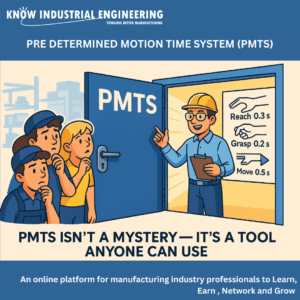
- Predetermined Motion Time System (PMTS)This article is contributed by Umang Kumar Singh. Predetermined motion time system (PMTS) is a method of arriving Standard time of a work, that comprises predetermined time values corresponding to each and every work element. Advertisement When we talk about Industrial engineering, work measurement plays a crucial role for measuring productivity and reducing operational costs. As we already have traditional ways of doing time study which are widely used, Predetermined Motion Time Systems (PMTS) is known for its speed of doing, accuracy and consistency in measurement of work and its time. Understanding the need of PMTS while we have traditional… Read more: Predetermined Motion Time System (PMTS)
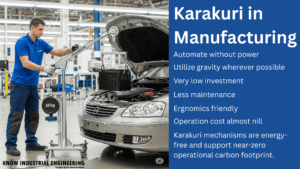
- Karakuri in ManufacturingThis article is written by Shreya Desai. She is experienced in Process improvement. Karakuri in manufacturing refers to smart, mechanical solutions that harness basic physical principles like gravity, levers, springs, pulleys, and counterweights to support operators and streamline tasks—without relying on electricity, motors, or automated systems. Advertisement What’s the coolest automation you’ve seen? Maybe a robotic arm that moves like a dancer. Or a voice-controlled machine that actually listens. Or something so digital, it blurs the line between real and virtual. Now flip that. Picture solving a production line problem with no power, no sensors, and zero code… Just springs.… Read more: Karakuri in Manufacturing
- Role of Industrial Engineer in unionized manufacturing
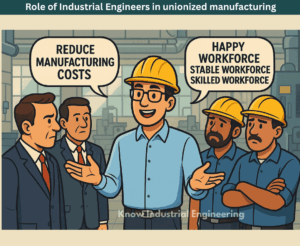
 This article is written by Umang Kumar Singh. The role of an Industrial Engineer in a unionized manufacturing environment is unavoidable, as it clear misunderstandings among workers, align both workers and management with company goals, and strengthens the relationship between them. Advertisement Everyone knows Industrial engineering as Resource Allocation Optimizer, Waste Reducer and Process Efficiency Increasing department. But what about the hurdles, what about the labor challenges which are contributing towards making the function of IE more complex. Somewhere Industrial engineer also works beyond technical improvement, which requires thinking from different perspective, building trust, and meeting worker’s requirement/interest with our… Read more: Role of Industrial Engineer in unionized manufacturing
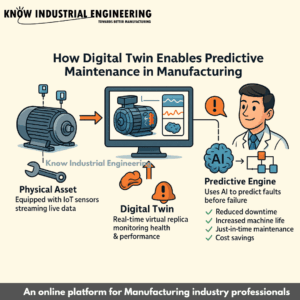
 - Digital twins in manufacturingThis article is written by Shreya Desai. She is experienced in Process improvement. What If Your Assembly Line Had a Mind of Its Own? A system on your shop floor that not only sees—but senses. One that learns your bottlenecks before your planners do. That catches torque drift before QA flags it. That knows what’s about to go wrong—not based on guesswork or KPIs from last month—but because it’s reading your factory in real time. Yes, I am talking about digital twins in manufacturing. Advertisement Too good to be true? Welcome to the world of Digital Twins: where your machines… Read more: Digital twins in manufacturing
- Process Capability IndexThis article is written by Shreya Desai. She is experienced in Process improvement. Let’s talk cookies—yes, the kind you bake. Advertisement Imagine you’re baking a batch, aiming for uniform size, shape, and that perfect golden brown. But occasionally, a few turn out too flat, too big, or just a tad burnt. That inconsistency is what we call process variability. And process capability index helps us to know how capable is the process to produce product without variation. In the world of manufacturing, our goal is to minimize that variability so that every product—not just cookies, but car parts, circuit boards,… Read more: Process Capability Index
- Teamwork in Manufacturing: How an Industrial Engineer and Friends Revived a FactoryIn the fast-paced world of manufacturing, where deadlines are tight, margins are thin, and pressure is constant, it’s easy to believe that only hard data and systems drive success. But sometimes, what truly turns things around is leadership built on trust, friendship across departments, and the silent strength of a well-bonded team. At the center of one such story stood an Industrial Engineer—a quiet force who brought together people, processes, and possibilities when everything else seemed to be falling apart. Advertisement Let’s learn the concept through a Story. The Calm Before the Storm For several years, the factory had operated… Read more: Teamwork in Manufacturing: How an Industrial Engineer and Friends Revived a Factory
- Uses of Why-Why analysis in 5S Implementation
 Why-Why analysis tool is used in 5S Implementation, to find the root causes of problems. Why-Why analysis will be useful in following stages of 5S Implementation. Advertisement We shall check in detail how we are using in each stage. Why-Why analysis in Shine Phase In Shine phase following activities are also done. Please note the following list is not limited to the all activities done in Shine phase. We have only listed the activities where why why analysis is used. So in this case, to identify these root causes Why Why analysis is used. Why-Why analysis in Standardize phase In… Read more: Uses of Why-Why analysis in 5S Implementation
 - How Industrial Engineers WorkIndustrial Engineers makes things better than anyone and they have a secret way of working to achieve this. Wondering How exactly do industrial engineers work? What systematic approach do they follow to bring improvements in factories, offices, hospitals, and even in services? Lets discuss in this article. Advertisement Let’s break down their method into simple stages and understand the deep philosophy that runs behind their success. 1. Collecting Data: Building the Foundation The first and perhaps the most crucial step for an industrial engineer is data collection.Without facts, there can be no improvement — only assumptions. Industrial engineers spend a… Read more: How Industrial Engineers Work
- Career Growth Tips for Young Professionals from a General ManagerIn this article, we will be sharing career growth tips from Bairy Venkata Ugendhar and following are the short introduction about him, before we start. Bairy Venkata Ugendhar GM – Industrial Engineering Operations | 28+ Years in Manufacturing With over 28 years of hands-on experience across apparel, consulting, machine tools, and finance industries, Mr. Ugendhar is a recognized leader in Industrial Engineering and Operations Excellence. From setting up greenfield factories to driving digitization and lean transformation, his journey is a goldmine of insights for aspiring professionals. Advertisement In this exclusive conversation, he shares career-defining lessons, tips for young engineers, and… Read more: Career Growth Tips for Young Professionals from a General Manager




















Now or Never
We’ve got your back on your manufacturing journey — Stay in touch
Follow us for step-by-step guidance, templates, and insights that save time and reduce mistakes.
Know Industrial Engineering Platform – Helping manufacturing industry professionals worldwide since 2019
Discover more from Know Industrial Engineering
Subscribe to get the latest posts sent to your email.

Clearly understood.
Thanks for the good work
It was really helpful. Thank you
Thank you Hilal for the positive feedback